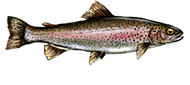
The Trinity River system originates high within the Trinity Alps National Forest. It winds its way through miles of jagged mountains, eventually emptying its waters into Clair Engle Lake, or as the locals call it, Trinity Lake. The dam at Trinity Lake dumps its water into Lewiston Lake. To learn more about the incredible fly fishing on Lewiston Lake, click here. These cold waters form a long, narrow waterway that eventually flows through Lewiston Dam to form the famous Trinity River, flowing nearly 200 windy miles through rugged country before joining the Klamath River and eventually the Pacific Ocean.
Fly Fishing the Trinity River
The town of Lewiston sits in a beautiful mountain valley at the very upper end of the river. From the Lewiston Dam downstream to the Old Lewiston Bridge is the area that has been designated as fly fishing only. This part of the river is open to fly fishing with barbless hooks only and catch-and-release regulations from the last weekend in April to September 15th. The consistent cold water coming out of the dam provides excellent habitat for a plethora of aquatic insects, with reliable hatches of caddis, stoneflies, and a wide variety of mayflies. There are numerous trout in this water, and usually a few adult steelhead lurking around as well.
The Trinity River supports a healthy anadromous run of steelhead, as well as Chinook and Coho Salmon and even healthy populations of both resident and sea-run brown trout. Throughout the seasons on the Trinity each of these spectacular game fish are brought to hand.
The big-fish action begins in late summer as the Chinook salmon begin to poke their noses in the upper reaches of the Trinity. These are massive, powerful fish, responsible for their share of shattered rods each year.
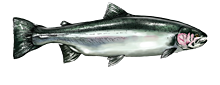
Following close behind the salmon are the famous steelhead of the Trinity River. We start targeting the steelhead from mid-October or early November (they arrive in numbers at different points each season) through February and sometimes into March. The fish average 24-28 inches (4-8 pounds) and are a mixture of about 60 percent wild fish and 40 percent hatchery fish. There are even steelhead landed every year on the Trinity that push 10-12 pounds and easily break the 30 inch mark.
All of these fish are full of fight; hook into one and you'll be the one that's really hooked! They are the true acrobats of the freshwater world, frequently jumping and thrashing about on the surface of the water in between reel-blazing runs and powerful rod-throbbing head shakes.
Traditionally, steelhead have been known as "the fish of a thousand casts." Indeed, in most watersheds that hold these sea-going rainbows, hooking a couple of fish in a week of hard fishing (often in inclement weather) is considered a good week. We're fortunate, however, to have the Trinity River, where our guides average 4-8 hookups a day and double-digit days even occur from time to time. This is some of the most consistent steelhead fishing anywhere.
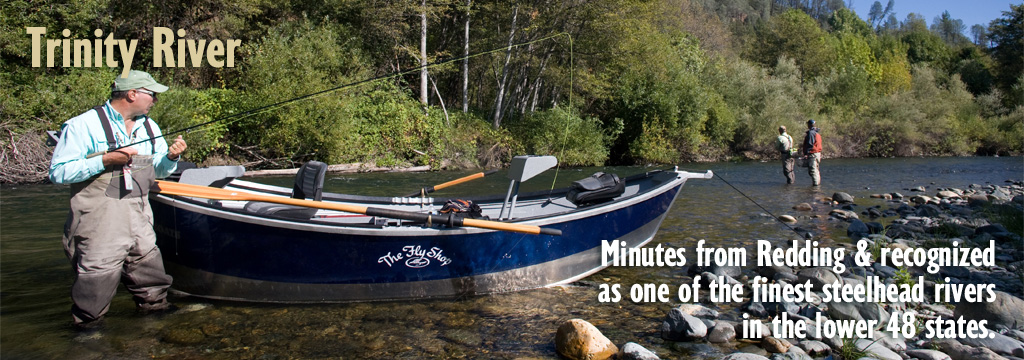
We fish the Trinity out of comfortable McKenzie-style drift boats, which enables our guides and clients to cover a lot of water and increase the odds of finding the fish. While drifting the river and fishing for steelhead, we frequently hook into some of the massive resident and sea-run brown trout that also call the river home. Some of these unique fish run upwards of 10 pounds and can hold their own with any of the steelhead in the river.
Trinity River Photo Gallery